
The Dream Gives You Direction. The Work Gives You Permission to Stand There.
Discovering Why, Volume 17. Subscribe here for more.
Discovering Why, Vol. 15: Everything I Needed to Know About Working with AI Agents I Learned in Kindergarten
Discovering Why, Volume 15. Subscribe here for more.Inside this Article... The insights industry is not in decline. It is in redesign. We have been here before,...
Discovering Why, Vol. 14: The Chronically Underserved Long Tail of Insights
Discovering Why, Volume 14. Subscribe here for more.Inside this Article... Introduction The Hidden Growth Trap When Infrastructure Becomes Drag The Better...
Discovering Why, Vol. 13: Probability, Statistics, and the Human Equation
Discovering Why, Volume 13. Subscribe here for more.Inside this Article... What I Learned at the “Probability & Statistics” Table The Formula Is Only the...
Discovering Why, Vol. 12: Follow the Money: The Rising AI Backlash
Discovering Why, Volume 12. Subscribe here for more.Inside this Article... Why the next chapter of AI in insights will be shaped less by hype and more by...
Introduction
Before Harry Connick Jr. played a single note at Carnegie Hall, he did something perhaps even more powerful. He let the audience into the emotional truth of the moment.
He said, in essence, that he does not typically get nervous before performances. But this night was different. It was the first time he had ever set foot in Carnegie Hall, let alone on that stage. No amount of preparation, he acknowledged, could fully prepare him for the moment when the reality and the vision became one.
With that statement, before the music began, he owned the audience’s hearts and minds. He helped everyone understand they were not simply about to hear a performance. They were witnessing a promise kept.
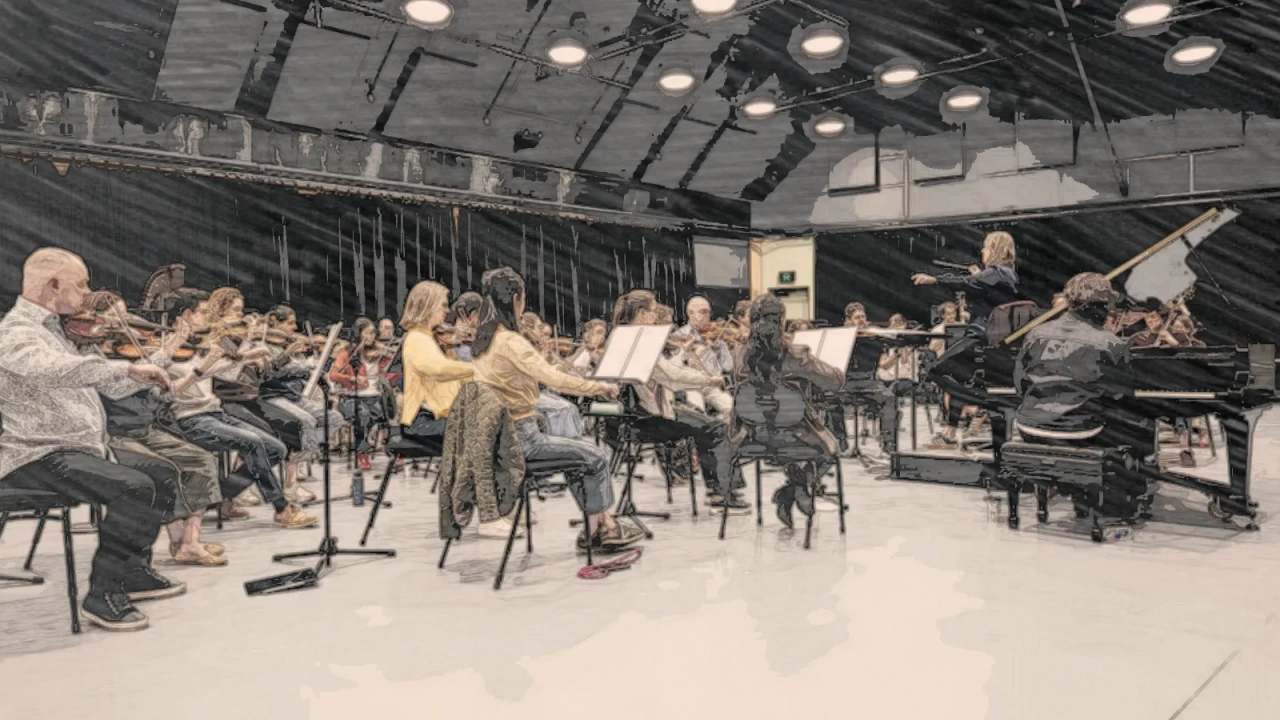
Connick continued to share that decades earlier, as a boy, he had promised his mother that one day he would play Carnegie Hall.
At 10 years old, he called the venue to inquire about scheduling a performance there, not realizing he had reached the box office. Politely, they told him they could not help him and suggested he look into getting an agent.
It was not a strategy, a business plan, or a deal backed by an agent. It was a picture in a child’s mind, born out of love for a mother who believed in him.
It did not happen then. But the picture stayed.

And over the years, he did not simply dream about Carnegie Hall. He became the kind of artist who could stand on that stage and belong there.
That is the version of manifestation I believe in: not wishing instead of working, but disciplined imagination tied to a work plan.
A vision is not powerful because it magically guarantees the future. It is powerful because it organizes the present.
The dream gives you direction. The work gives you permission to stand there.
That is the lesson for anyone building a career in insights.
Your Carnegie Hall may not be a concert hall. It may be becoming a partner, launching your own consultancy, becoming a fellow, earning a lifetime achievement award, stepping into an executive role, or building a practice clients cannot imagine doing without.
It may be the day a client brings you in before the brief is written because they trust how you think. The day a CEO pauses and says, “Let’s listen to what the research is telling us.” The day your point of view changes the direction of a product, a brand, a team, or a business.
But none of those moments begins in the room where they happen. They begin much earlier, in the standards you choose to live by every day.
In insights, that work shows up in craft, judgment, courage, trust, and generosity.
Craft is asking better questions and moving from what people said to what it means. Judgment is separating signal from noise when the data is not particularly forthright. Courage is telling the truth the room may not want to hear. Trust is protecting confidence, giving credit, and becoming reliable when the stakes are high. Generosity is helping others rise: mentoring, making introductions, sharing what you know, and creating opportunity for people who may one day stand on stages of their own.
This is how your personal brand is built: not simply by self-promotion, but by repeated proof.
Over time, people associate you with something specific: clarity, rigor, creativity, bravery, commercial impact, wisdom, care. Opportunity finds you because you became visible evidence of the thing you wanted to be trusted with.
And still, even after years of preparation, the moment may feel bigger than you imagined.
That is not failure. That is the point.
Preparation does not remove the emotion from big moments. It lets you stand inside them. To breathe. To begin. To play the first note.
So this week, build your own Carnegie Hall map.
What is the stage?
What must be true for you to belong there?
What must you practice before anyone is watching?
Who will be better because you made it?
If it is partnership, what must people trust you to carry? If it is an award, what contribution would make it feel earned? If it is a consultancy, what problem would clients miss if you disappeared? If it is leadership, then who are you becoming when no title is attached?
This is not ego. Done well, it is accountability.
The picture in your mind should not only make you feel successful. It should make you feel, and be, more responsible for your skills, your reputation, your relationships, your promises, and the people who may one day learn from how you carried yourself.
The dream is not the achievement. The dream is the compass.
Every great thing starts with someone seeing what does not yet exist. But the people who rise to the top do something more.
They keep seeing it.
Then they keep working.
Until one day, the imagined room becomes a real one.
Before the first note, the audience already understood. This was not merely a performance. It was a significant and essential promise kept.
This is what the best careers eventually become: not a title, not an award, not a stage, but the visible evidence of years of invisible work.

The dream gives you direction.
The work gives you permission to stand there.

Let's Work on Your Next Market Research Project
Get started with your next initiative
Follow
OvationMR



Resources
Calculators
Resources
Calculators
Visit Us:
- 101 Avenue of the Americas
- 9th Floor, Suite 908
- New York, NY 10013