The Surveyor’s Truth and the Stakes in the Dirt
Discovering Why, Volume 5. Subscribe here for more.
Inside this Article…
- Introduction
- Starting at the Bottom With a Rod in My Hands
- Apprenticeship Is a Gift You Only Recognize Later
- Art and Science, Together on Purpose
- The Road That Took Me From Atlanta to Louisiana
- The Sweet Smell of Pogie Fish and Chicory
- Braving the Elements on Sea and Land
- Why Surveying Still Matters to Me
- Bringing It Home to the Practice of Insights
- A Final Thought From the Guy Who Once Carried the Rod
Discovering Why, Vol. 6: From the IBM 370 to AI Agents, Same Movie, New Special Effects
Discovering Why, Volume 6. Subscribe here for more.Inside this Article... Introduction The real parallel: ecosystems beat heroics Why things break: contention...
Discovering Why, Vol. 4: Discovering Why Moore’s Law is About Economics, Insights, and Removing Customer Constraints
Discovering Why, Volume 4. Subscribe here for more.Inside this Article... Introduction So I asked Gordon what he meant by “insight.” Here’s my private rule for...
Introduction
If you want to build something that lasts, you start by admitting a humbling reality. The world is already here. It has contours. It has limits. It has quirks and scars, and secrets. You can wish for flat land, hope for clear skies, and easy access all you want, but the earth is not impressed by your optimism.
That is why I still have a soft spot for land surveyors.
Surveying is one of those professions that quietly sits under everything. Roads. Airports. Homes. Pipelines. Drainage canals. Bridges. Ports. Rail. Stadiums. Cities that grow where swamps once shrugged and said, “No thanks.” Before the concrete trucks arrive and before the ribbon cuttings and before anybody argues about paint colors in the lobby, there is a person in the field measuring what is real.
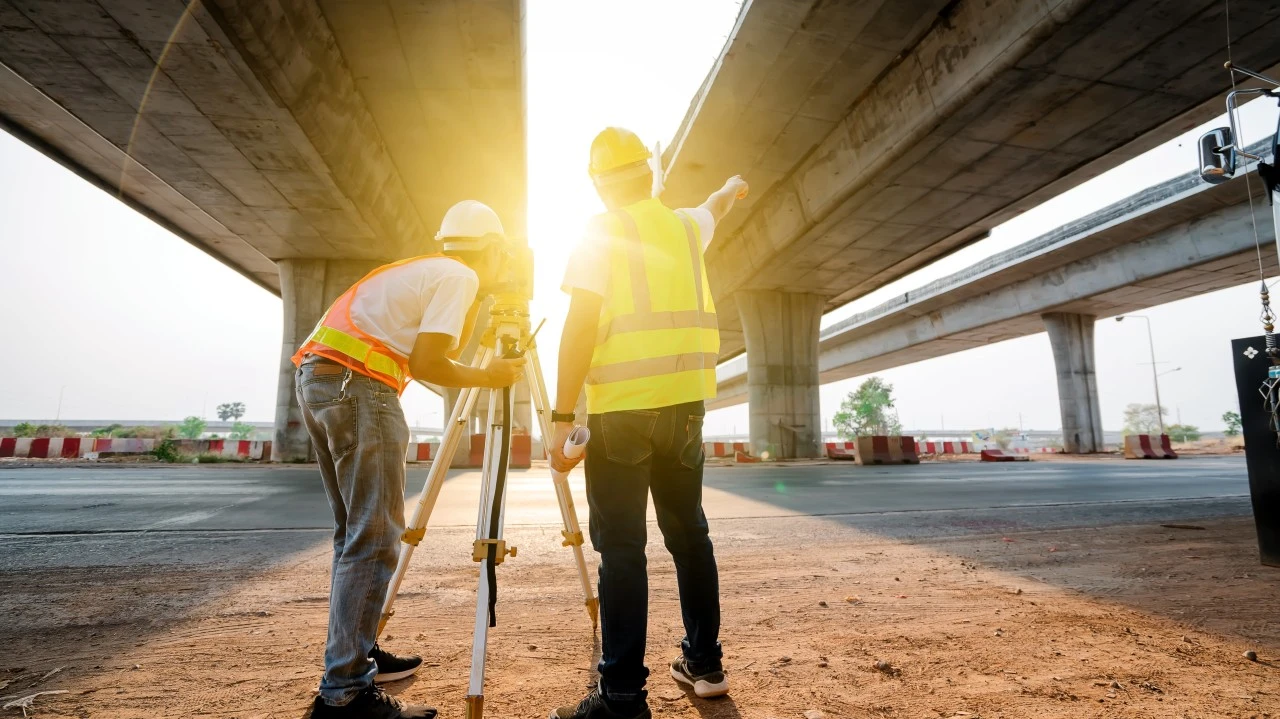
Truth first. Then the dream.
And if you have ever tried to do anything meaningful in business or in life, you know that is not just a construction principle. It is an… Insights principle.
You can’t strategize your way around reality. You can’t PowerPoint your way through a lie. You can, however, learn to see clearly, measure honestly, and translate what you find into decisions that hold up under pressure.
That is what surveying taught me.

Starting at the Bottom With a Rod in My Hands
I came out of high school in Atlanta in 1977, and two years before I started university at age 19, I left home and went to work in the land survey business. I did not walk into that world with a grand plan. I walked into it with a willingness to work, a strong back, and just enough confidence to say “yes” before I fully understood what “yes” would require.
I applied for a position at Atlanta Engineers, Inc. They were managing a massive redesign of the Atlanta Airport. That alone tells you something. Big projects do not start with big speeches. They start with lines, marks, benchmarks, and people who know how to pull truth out of the ground.
I started as a rod-man. If you have never met a rod-man, let me introduce you. The rod-man is part human measuring stick, part pack mule, part apprentice, and part lightning rod for every piece of feedback the rest of the crew wants to deliver. If the instrument-man is having a bad day, you feel it. If the crew chief is in a hurry, you feel it. If the weather is miserable, you really feel it.
You hold the rod. You keep it steady. You learn to communicate without wasting words. You learn that “a little to the left” means something very specific, and it is not optional. You learn that precision is a discipline, not a personality trait.

And you learn quickly that nobody cares how smart you think you are if you can’t read the situation, do the math, and keep moving.
Over time, I became the instrument-man. That is when you start to understand the soul of the work. The instrument-man operates the equipment, takes the shots, calls the readings, and turns the messy outdoors into something that can be trusted on paper. You have to know the instrument like it is an extension of your own eyes.
Then, in short order, I became a crew chief.
That is when the work stops being “here is what I do” and becomes “here is what we must deliver.” You become responsible for the quality, pace, and the safety. You become the translator between the job plan and the realities of the field. You make decisions when the stakes are hidden, and the clock is loud.
It is amazing what responsibility does for your maturity. It is also amazing what responsibility does for your appreciation of people who have already learned the hard lessons.

Apprenticeship Is a Gift You Only Recognize Later
One of the greatest things surveying gave me was respect for apprenticeship.
Surveying is not something you master by reading a manual. You learn from people. You learn from the ones who have scars on their hands, and confidence in their voice, and a way of seeing the world that comes from years of solving problems outdoors.
You learn the tricks that are not in textbooks. You learn how to set up when the ground is soft, and the wind is rude. You learn how to find a line that disappeared under brush and time. You learn how to keep a crew moving when the plan meets the swamp.
You also learn something else that is rare in modern work. You learn patience with the process.
In a world that loves shortcuts, surveying forces honesty. If you skip steps, the error does not politely stay hidden. It shows up later in expensive ways.
That is a leadership lesson, and it is an insights lesson too.
Good insights work is apprenticeship work. You learn from seasoned researchers, moderators, analysts, strategists, storytellers. You learn by doing the hard parts, not by talking about them. You learn how to ask better questions. How to listen without forcing the answer. How to be rigorous without losing empathy. How to translate messy human reality into something decision makers can trust.
And you learn how to admit when you need another reading.
Art and Science, Together on Purpose
Surveying is grounded in truth, but it is not cold. It is art and science together.
The science is obvious. Measurement. Angles. Elevation. Coordinates. Error reduction. Checks and rechecks. Geometry. Trig. Algebra. The stuff I am grateful I paid attention to in high school, even when I was convinced I would never need it again.
(High school me was confident. High school me was also wrong, which is a theme that will return.)
But the art is what surprises people. Surveying requires creative thinking because nature is not neat. You rarely get a clean line of sight. You rarely get easy access. You rarely get perfect conditions.
You navigate obstacles above ground and below. Trees. Water. Brush. Mud. Heat. Equipment limits. Human fatigue. Unknowns.
Sometimes you have to see around corners. Sometimes you have to find an approach nobody planned for. Sometimes you have to take a shot from a place that makes no sense until you are the one doing it.
That blend of art and science is exactly what great insights work demands.
We can model, quantify, predict, segment, and dashboard. We should. But people do not live in dashboards. People live in contradictions, habits, pressures, and stories. The art is in interpretation. The art is in framing. The art is in knowing what matters and what does not. The art is in communicating truth in a way that leaders can act on.
Science gives us confidence in the measurement. Art gives us confidence in the meaning.
If you only do one, you will miss the point.

The Road That Took Me From Atlanta to Louisiana
Land surveying also taught me something else. If you say “yes” to opportunity, you may end up in places you never imagined.
My path took me from Atlanta Engineers to New Orleans running crews at Lowes Engineers, a subcontractor of the Army Corps of Engineers. That sentence still makes me pause.
Because suddenly I was not just working on a big project. I was in the middle of a world where water, land, and human ambition are constantly negotiating.
Down there, we were managing land-channel movement to manage water runoff and flood mitigation. If you have never spent time in that environment, here is the short version. Water always wants to win. The land is soft. The weather is intense. And anything you build must respect the fact that the earth and the water have been there longer than your job site trailer.
We were outfitted with machetes and shotguns for the alligators.
Let me say that again for my friends who work in climate-controlled offices with artisanal coffee.
Machetes and shotguns. For alligators.
If you are wondering whether that changed my view of “workplace hazards,” the answer is yes. To this day, when someone tells me their week is tough because the Wi-Fi was slow, I try to be compassionate. I really do. I just also quietly picture an alligator giving a performance review.

The Sweet Smell of Pogie Fish and Chicory
Some of my strongest sensory memories come from that time.
In Cameron, Louisiana, I would start my day near the sweet smell of pogie fish processing and chicory.
If you have never smelled pogie fish processing, I will not ruin your lunch by describing it in full detail. Just know this. It is a smell with confidence. It arrives before you do. It stays after you leave. It does not ask permission.
And chicory has its own earthy depth, like New Orleans itself. Together they made mornings feel like a strange blend of industry and tradition, of hard labor and local rhythm.
Then we would head out to run depth changes in the shipping channels due to river silt. That work matters. Shipping channels are arteries of commerce. If the depth changes and nobody accounts for it, things go wrong fast.
So there we were, in the elements, measuring what the river had quietly changed overnight.
That is reality. That is truth you cannot negotiate with.
And it is also a perfect metaphor for what happens in markets.
Consumers shift. Culture shifts. Competitors shift. Technology shifts. Trust shifts. The channel looks the same on the surface, but the depth has changed.
If you assume yesterday’s map is still accurate, you will run aground.

Braving the Elements on Sea and Land
Surveying is a job that teaches you respect for the environment, because the environment is always part of your team, whether you invited it or not.
You brave heat that drains your patience. You work in rain that turns the ground into a lesson. You deal with wind that makes equipment feel like it has a personality. You handle insects that seem personally offended by your presence.
You also learn to keep going.
There is a kind of quiet confidence that comes from doing hard things outdoors, day after day. You learn you can endure. You learn you can solve. You learn you can lead when conditions are not ideal.
That confidence is different from the confidence that comes from being told you are talented. It is earned confidence. It has weight. It shows up when you need it.
In insights, we need that same resilience.
We face shifting business goals, messy data, biased inputs, timeline pressure, and stakeholders who want certainty in a world that only offers probabilities. We need people who can hold steady, take another shot, and keep the work grounded in truth even when the environment is loud.

Why Surveying Still Matters to Me
When I look back, I see surveying as a foundational chapter in my life. Not because I stayed in that industry forever, but because it shaped how I think.
It taught me that foundations matter.
It taught me that truth matters more than comfort.
It taught me that you can blend rigor with creativity.
It taught me that an apprenticeship is not a step down; it is a step in.
It taught me to respect the people who do essential work that most people never see.
And it taught me that the best way to build confidence is to build competence.
That last one is worth repeating, especially in a world that sometimes confuses volume with value. Confidence comes from experience. From the measurements you have taken. From the errors you have learned to avoid. From problems you have solved in real conditions.
You do not become a crew chief by talking about being a crew chief.

Bringing It Home to the Practice of Insights
So what does all of this have to do with insights?
Everything.
Insights is surveying for decisions.
We are in the business of helping organizations build. Build products. Build experiences. Build brands. Build relationships. Build growth.
But if we build on assumptions, we build on sand.
Our job is to measure reality. To find the true contours of consumer behavior. To understand the hidden obstacles below the surface. To identify where the “depth” has changed in the market channel. To tell leaders what is true, even when it is inconvenient.
We also have to bring art and science together.
We need the science of methodology, sampling, statistics, design, modeling. We need it badly. It keeps us honest.
And we need the art of empathy, interpretation, narrative, and context. We need that too, because humans are not spreadsheets.
We need to be willing to brave the elements. Not literal alligators, hopefully, but the modern equivalents. Ambiguity. Noise. Speed. Skepticism. The temptation to take shortcuts. The pressure to tell people what they want to hear.
And we need apprenticeship and training. The human kind. We need to build knowledge from people who have come before. We need to honor craft, not just tools. AI can accelerate work, but it cannot replace wisdom. Not the kind that comes from being out there, making real measurements, learning where errors hide, and developing judgment.

A Final Thought From the Guy Who Once Carried the Rod
When I was a young rod-man, I did not know I was learning a philosophy of truth. I thought I was learning how to hold a rod still and not get yelled at.
Turns out those are related.
Holding the rod still is a commitment to accuracy. It is saying, “I will not let my wobble become your mistake.” That is integrity in a small form.
In insights, we need that same commitment.
Because leaders make bets with our work. Real bets. Money. Jobs. Trust. Strategy. Growth. Sometimes even safety.
So the next time you see something being built, or the next time you sit in a meeting where someone wants to rush past the “research part” to get to the “decision part,” I want you to picture a survey crew out in the elements.
Measuring. Checking. Adjusting. Respecting the land. Respecting the truth.
Because the best builders, whether they build airports or brands, know the same thing.
You do not get to create what is possible until you have faced what is real.
And if you ever need a reminder, just imagine me in Louisiana, standing near a shipping channel at sunrise, smelling pogie fish and chicory, doing trig in my head, and keeping one eye on the water like it might file a complaint.
Truth has a way of showing up.
Better to meet it with a measuring rod than with a surprise invoice.

Let's Work on Your Next Market Research Project
Get started with your next initiative
Follow
OvationMR



Resources
Calculators
Resources
Calculators
Visit Us:
- 101 Avenue of the Americas
- 9th Floor, Suite 908
- New York, NY 10013